In situ continuous monitoring of systemic gastric biomarkers
Schematic diagram of nasogastric compatible sensors
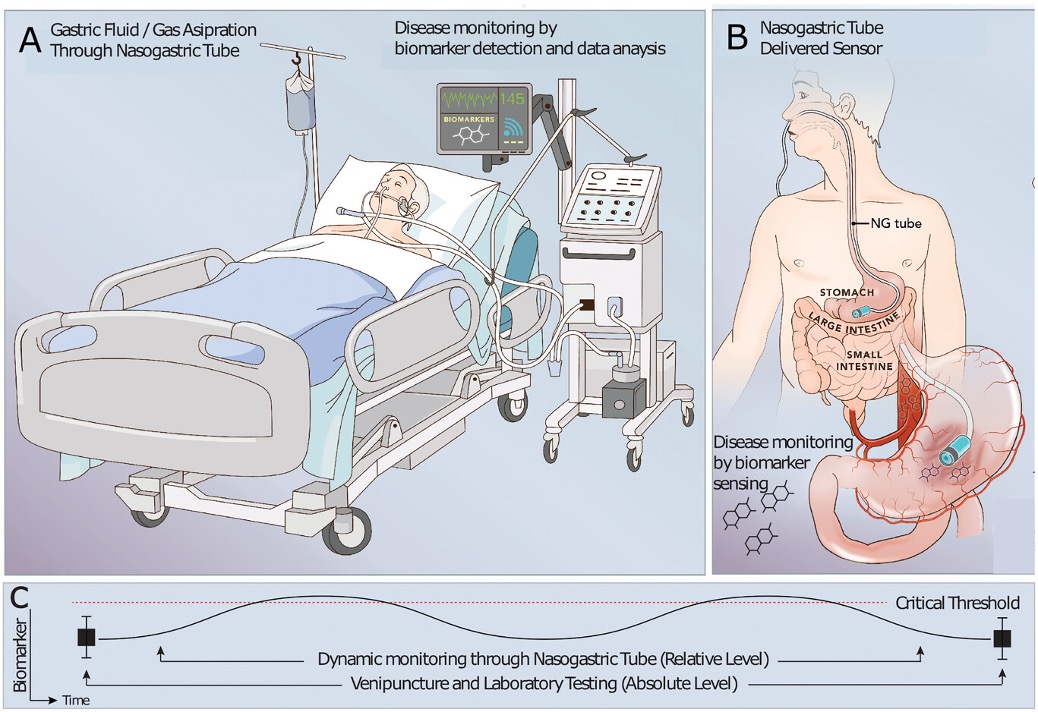
Figure 1. Schematic diagram demonstrating the concept to monitor systemic biomarkers with nasogastric (NG) compatible sensors. Gastric fluid (GF)/gas contains systemic biomarkers, and these can be monitored through A) aspiration and continuous analysis with ex vivo systems or B) intragastric sensor placements via NG tubes.
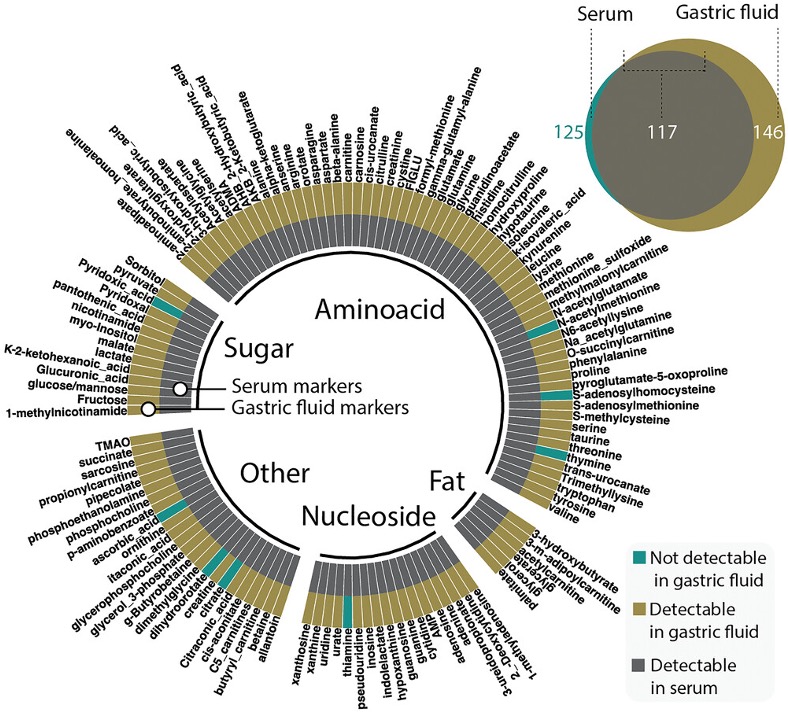
Coincidence of markers in serum and gastric fluid
Figure 2. Coincidence of markers in serum and gastric fluid (GF). The plot shows a comparison of a set of analytes in serum- and GF. All but 8 out of 125 serum analytes (inner circle) are detectable in porcine GF (outer circle).

Gastric motility 3D mapping

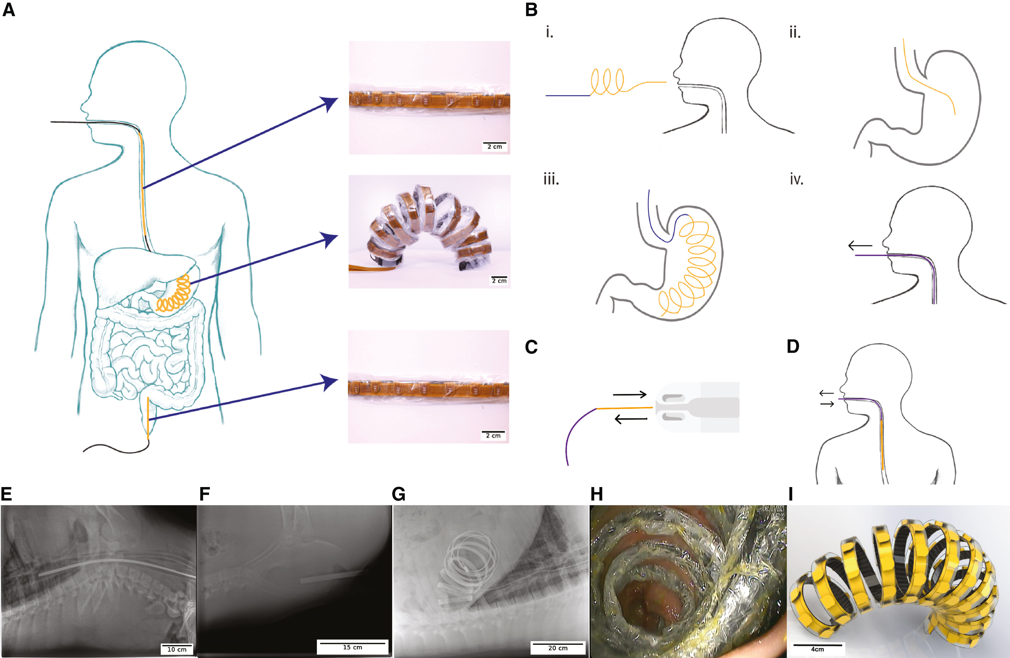
Universal motility-mapping system
Figure. (A) Illustration of the universal motility-mapping system with tubular and bolus sensing probes. (B) Deployment and retrieval workflow of the stomach motility probe. (C and D) Deployment and retrieval illustrations for rectum and esophagus probes.
Video. Demonstration of the gastric motility mapping system in action.

In situ continuous monitoring of gastric electrophysiology

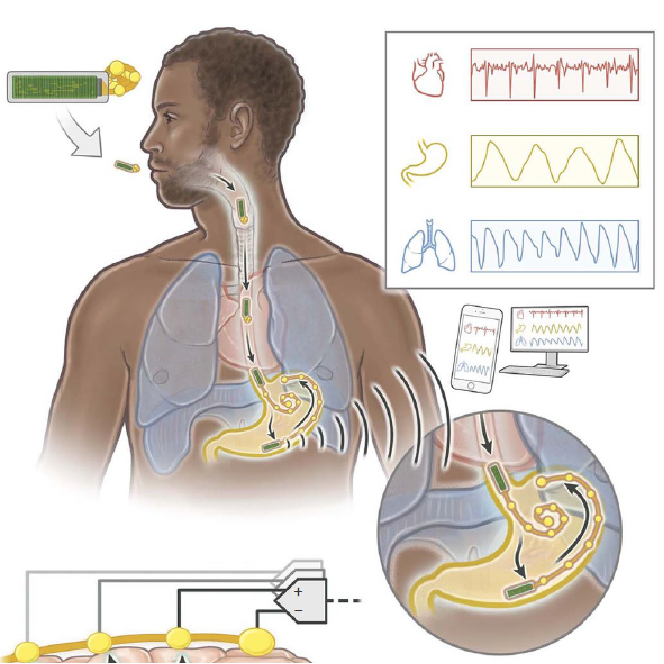
MiGUT device schematic
Figure 1. Schematic representation of the MiGUT device containing electronics housed in an ingestible capsule with linear recording electrodes stored in a rolled configuration. Following ingestion, the electrodes unroll and record gastric biopotentials.
Endoscopic image of MiGUT electrodes
Figure 2. Endoscopic image of MiGUT electrodes deployed against the gastric mucosa. Sensing electrodes (5 mm) are distinguished from the reference electrode (8 mm) by size.
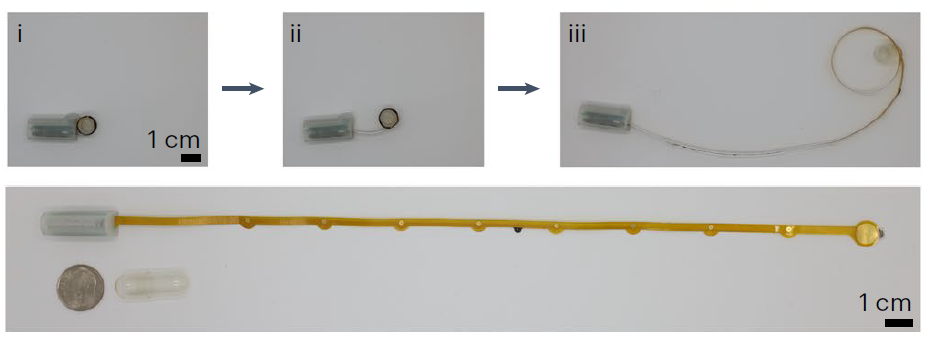
MiGUT electrode unrolling
Figure 3. Unrolling of MiGUT electrodes due to strain of polyimide ribbon following wetting of water-soluble adhesive, showing deployment progression. Total length: 25 cm.
Single channel recording
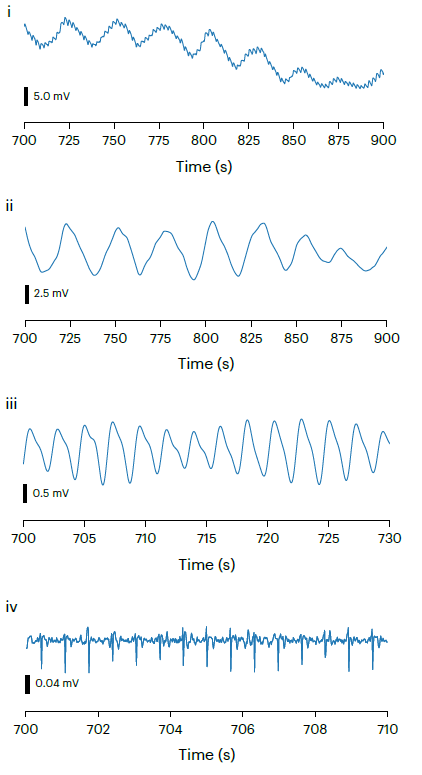
Figure 4. Representative single recording channel showing raw collected data, 'slow wave' band (0.01-0.25 Hz), 'respiration' band (0.25-5 Hz), and 'EKG spikes' band (5+ Hz).

Electroceuticals for intestinal reanimation

INSPIRE overview
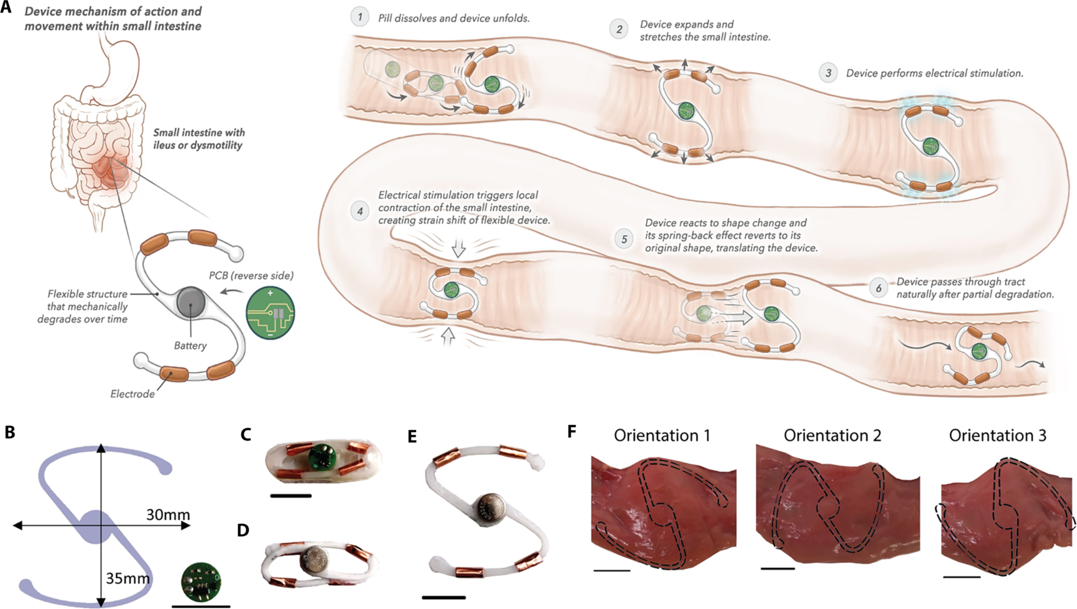
Figure 1. Overview of the INSPIRE. (A) Mechanism of action for small intestinal motility. (B) Form factor and geometry. (C) Encapsulated in triple-zero capsule. (D) Degraded inSPiRe after 2 hours in SiF. (E) Expanded view with battery. (F) Three predominant orientations in small intestinal tissue.
Motility and biocompatibility results
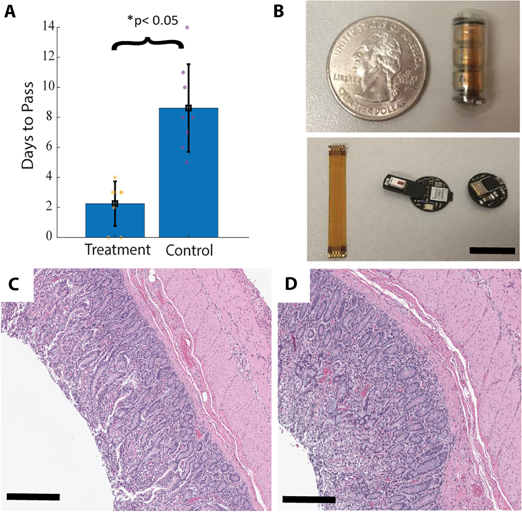
Figure 2. Motility and biocompatibility. (A) The inSPiRe significantly decreased the number of days to pass through the tract. (B) Motility rate assayed by tracking passage time. (C-D) Representative tissue samples showing no significant difference between control and treated animals.

In vivo gastrointestinal dosimeter

PIN photodiode and capsule electronics
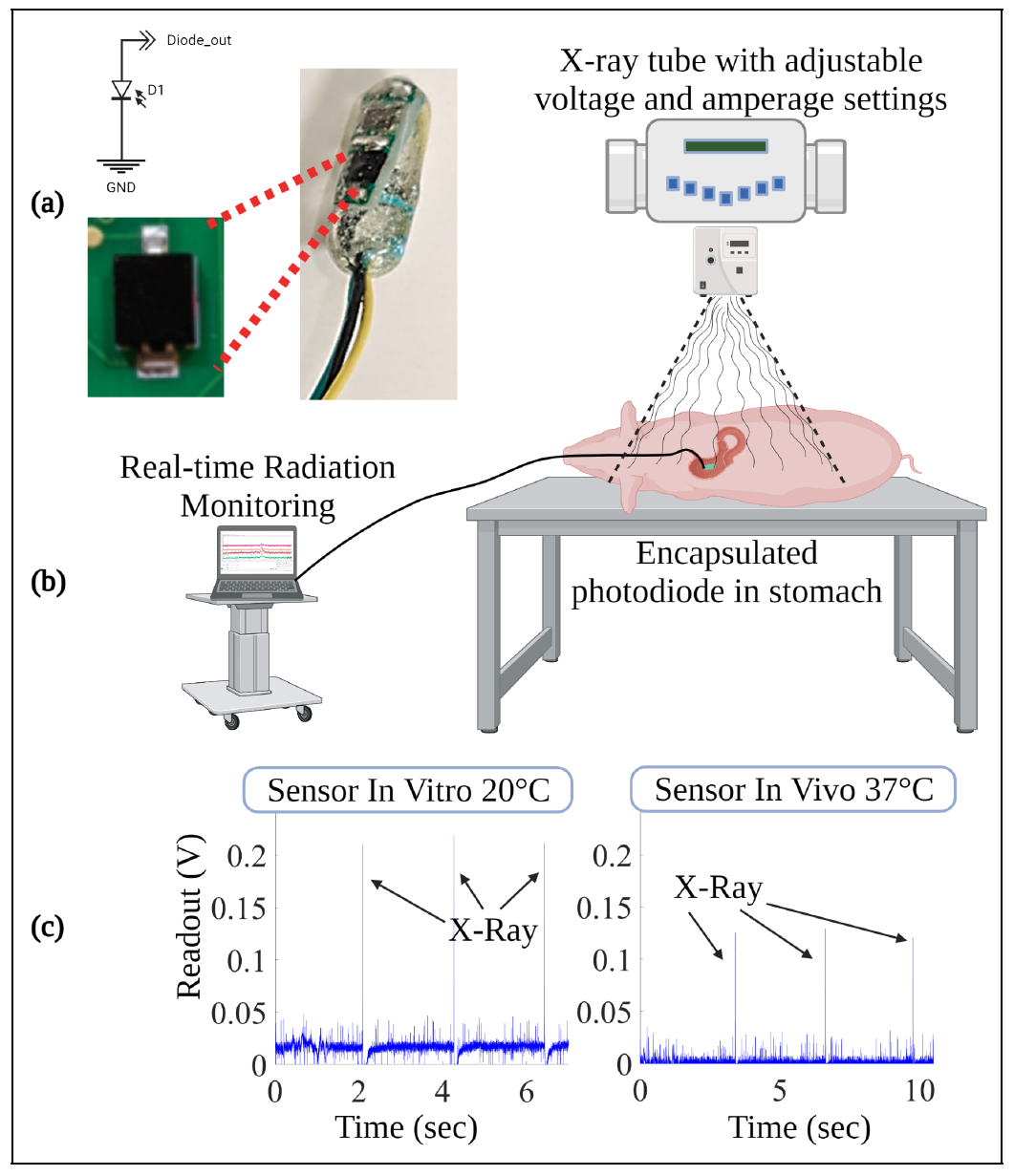
Figure 1. (a) Optical images of the PIN photodiode and encapsulated capsule electronics with electrical schematic. (b) Schematics of the overall in vivo experimental setup. (c) In vitro (left) and in vivo (right) readouts of the PIN diode.
X-ray image of encapsulated PIN photodiode
Figure 2. X-ray image of the encapsulated PIN photodiode positioned within the stomach of a swine.
Photodiode characterization
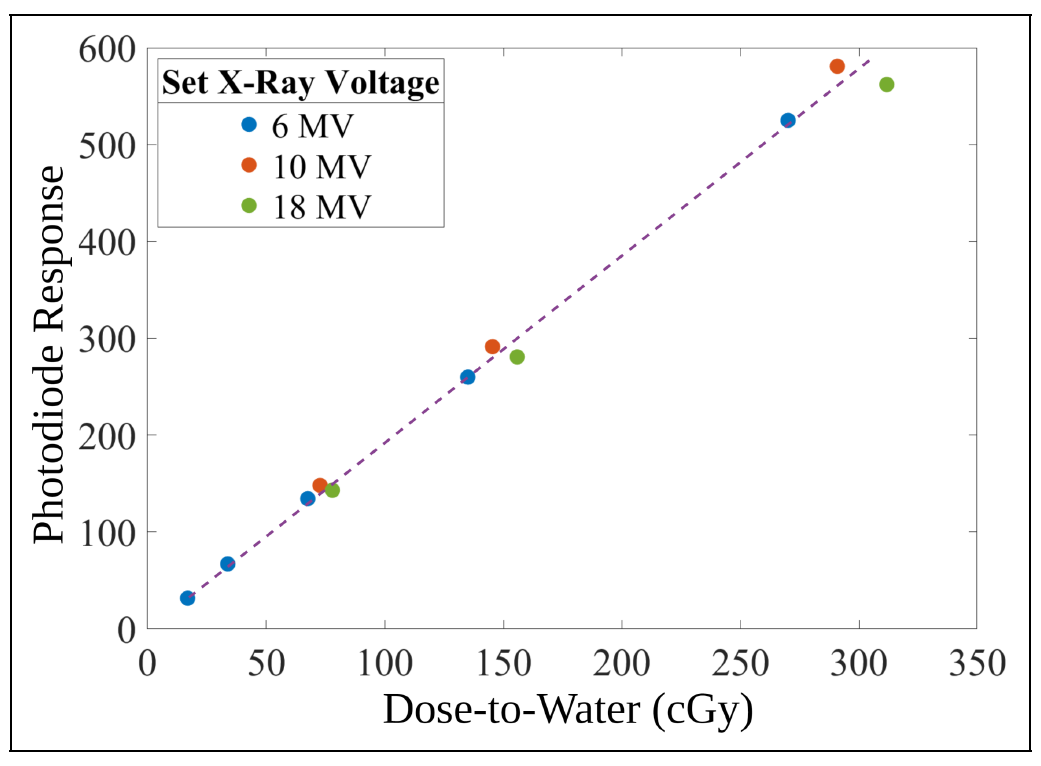
Figure 3. Photodiode characterization using a LINAC to verify its reliability and consistency in detecting X-rays of varying intensities and energies.

In situ detection of gastrointestinal inflammatory biomarkers

Our research focuses on developing electrochemical gas sensors for real-time detection of inflammatory biomarkers in the gastrointestinal tract. These sensors enable early detection and monitoring of inflammatory conditions.